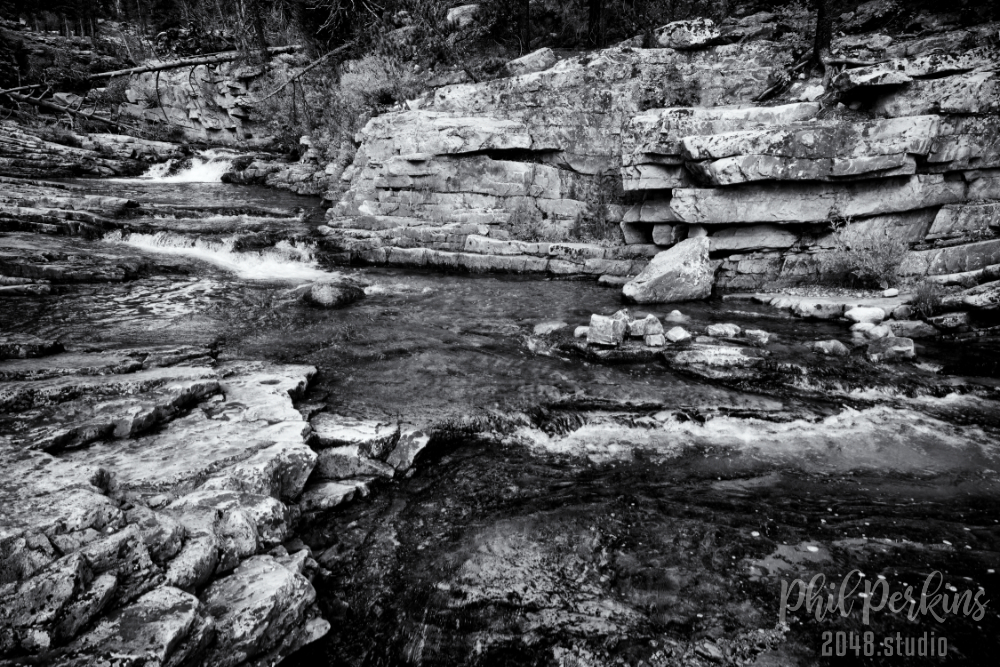
Cascades on Little Soak Creek

This long exposure photograph captures fast-flowing water along Little Soak Creek, yielding a smooth, silky appearance. Located upstream from Stinging Fork Falls, you can enjoy this landscape scenery on a print in you home when you visit my galleries at Saatchi Art and/or Pixels.

Thanks for stopping by!

10 responses to “Cascades on Little Soak Creek”

  1. Hazel Avatar

    It looks like an art rather than a real creek. Beautiful.

    1. Phil Avatar

      Yes, indeed. Often, it’s the simple scenes that make the picture better. This waterway was very shallow, but certainly had character. Thanks so much, dear Hazel & I’m glad you like it 🤗

      1. Hazel Avatar

        Nature has always had character, I believe. You’re always welcome, Phil.

  2. Vanya Wryter Consulting Avatar

    The water movement is beautifully captured!

    1. Phil Avatar

      You’re most kind, dear Vanya ~ thanks so much & have a great day! 🤗

  3. Kymber @booomcha Avatar

    The water almost looks like smoke. It’s so beautiful, Phil.

    1. Phil Avatar

      Good morning, dear friend. It’s so nice to see you’re lovely smile to start the day! The water looks wonderful, too, and I’m so glad you like it ~ thank you, Kymber 🌺xo

      1. Kymber @booomcha Avatar

        You’re so welcome, Phil. 🌸

  4. TiffanyArpDaleo Avatar

    I’ve always wanted to learn how to do long exposure, this is breath taking Phil!

    1. Phil Avatar

      You’re a sweet heart, my dear friend Tiffany ~ thanks so much!

      The trick with long exposures is to keep the light low enough so as not to washout the highlights. So many long exposures, while beautiful, allow too much light and the water is simply pure white without discernible color, deviations.

      To manage the light, I visit these areas at or before sunrise, or near sunset. While I make changes to settings on the fly, ideally I’d like to have the ISO set low at 100, the Aperture near fully closed (f22, etc. – depends on lens), and the Shutter set to 1/2 second (more time for low volumes of water, and faster when the water is voluminous).

      There comes a point (during sunrise hours) when the light is too much…ISO is already as low as possible, and the Aperture is nearly closed. At that point, you’ll have to speed up the Shutter time – or, as I do, put on a Polarizing lens. This is like a mild ND (Neutral Density) filter, which I personally do not carry.

      If the water is too bright with light (white without definition), and you have room to make adjustments, you can deliberately underexpose the image to keep it from washing out – then, in post production (Affinity Photo, Photoshop, Lightroom, etc.), add brightness (increase exposure) to the darker areas.

      There are several other factors, but these are the fundamental elements I consider when taking long exposure photographs – waterfalls, cascades, etc..

      Have a great day! ✨🤗

Leave a Reply

2048 Studio

© 2026 Phil Perkins
All Images & Writings
All Rights Reserved

Discover more from 2048 Studio

Subscribe now to keep reading and get access to the full archive.

Continue reading